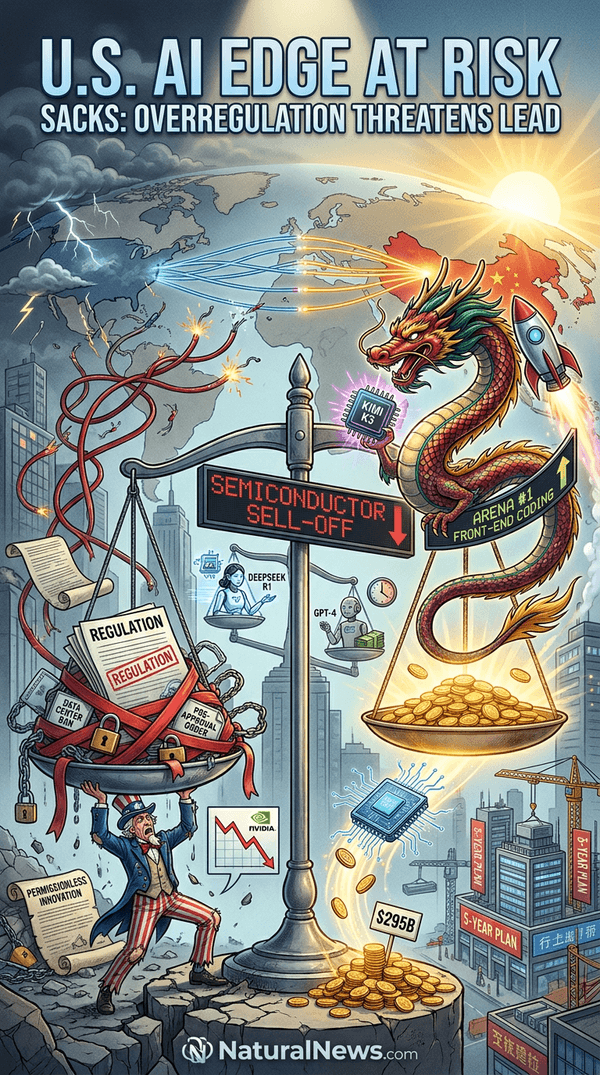
The model, Kimi K3, was introduced Thursday by Beijing-based startup Moonshot AI, according to multiple reports. Developers claimed it achieves benchmark results comparable to leading U.S. models from Anthropic and OpenAI, including in reasoning and code generation tasks [1]. The AI evaluator Arena ranked Kimi K3 first in front-end coding, according to published leaderboards [2]. Sacks described the development as a warning sign for U.S. policy direction [1].
Moonshot AI stated that Kimi K3 achieves benchmark results comparable to Anthropic's Claude and OpenAI's GPT-4 in several tests, including reasoning and code generation, according to reports [1]. Arena, a widely cited AI ranking platform, elevated Kimi K3 to the top position for front-end coding tasks on Thursday, according to its published leaderboard [2]. The release triggered a sell-off in semiconductor stocks, with the technology sector entering bear territory amid renewed concerns about Chinese AI competition and whether U.S. AI investment returns will meet expectations, analysts noted [3].
David Sacks described the development as "concerning" in a post on X, the platform formerly known as Twitter, according to reports [1]. The advancement follows a series of Chinese AI breakthroughs, including the DeepSeek R1 model earlier in 2025 that outperformed OpenAI's O1 and was trained at a fraction of the cost, according to reports [4]. An increasing number of major Western corporations are adopting Chinese AI models, signaling a significant challenge to U.S. dominance in the sector, according to a July 2025 report [5].
In a series of posts on X, Sacks wrote that "meanwhile America is tying itself in knots: politicians and bureaucrats are banning new data centers, piling on state regulations, and pushing for new federal agencies to pre-approve frontier models," according to reports [1].
"This is how you lose the AI race," Sacks wrote. He added that "permissionless innovation is how America won the internet and became the technological envy of the world," according to his social media posts [1].
Sacks called for targeted risk management rather than broad regulatory restrictions, warning that U.S. leadership could "evaporate" if current trends continue. His comments echo warnings from other industry leaders. Nvidia CEO Jensen Huang warned in November 2025 that the United States is set to lose the AI race to China, citing lower energy costs and pro-innovation regulations as key advantages for China, while U.S. export controls are forcing China to build a self-sufficient tech ecosystem [6]. Nvidia's chief also stated that China could surpass the U.S. in AI not because of superior technology, but due to state-subsidized energy costs and streamlined regulations [7].