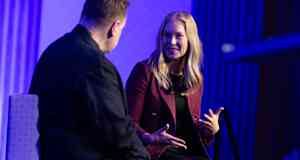

Most companies are approaching AI adoption backwards by optimizing how individuals use AI instead of how teams work together, said Dr. Molly Sands, head of the Teamwork Lab at Atlassian, during a fireside chat with VentureBeat senior technology contributor Sam Witteveen at VB Transform 2026.
Sands leads a team of behavioral scientists and psychologists who study how AI is reshaping the way people work together, using those findings to help organizations redesign how work gets done.
"We don't just study it, we also actively go in and change it," she explained. Her teams teach new ways of working and remap how work flows across companies, a challenge that many organizations are still struggling with, she said.
Atlassian's annual State of Teams Report, which this year surveyed 12,000 global knowledge workers and interviewed roughly 200 Fortune 1000 executives, found a significant disconnect between activity and value, showing that everyone is using AI, while very few can yet locate where it pays off.
"89% of those executives told us that individuals are speeding up in their companies, and only 6% of them said they could point to specific examples of clear ROI," Sands said.
But roughly 14% of teams had translated AI usage into real value — meaning a single organization could contain a handful of high-performing teams surrounded by others seeing no return at all.
Those leading teams shared three characteristics: context, workflows and culture. The teams pulling ahead were building what Atlassian calls a context graph by capturing goals, decisions, and organizational knowledge in shared digital records rather than leaving them in individual memory. Across products such as Jira and Confluence, the graph connects work items, goals and the people doing them, giving AI access to the organizational context it needs.
On workflows, the winning teams redesigned entire end-to-end processes rather than simply accelerating isolated tasks. Otherwise, speeding up individuals who are pointed in slightly different directions only causes them to “very quickly start to crash into each other,” as Sands puts it.
On culture, the fastest-moving teams worked under leaders who explicitly encouraged learning and experimentation, while making it clear that some experiments would fail.