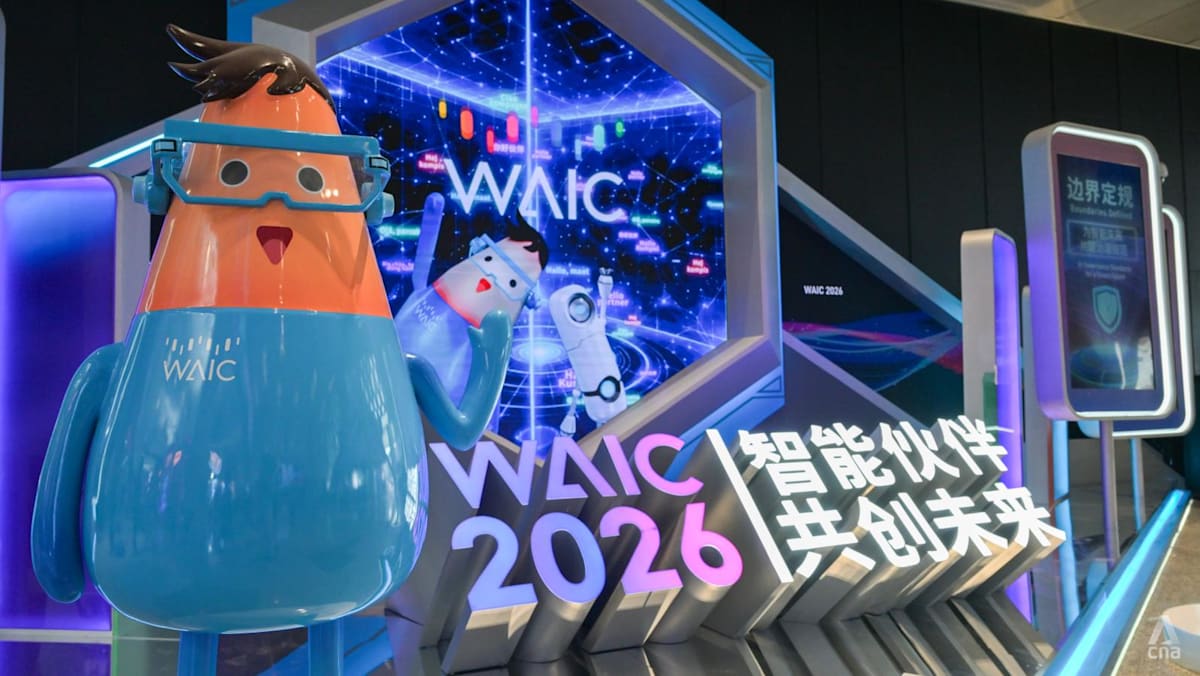
Chinese tech firms were showcasing advanced agentic smartphones at the 2026 World Artificial Intelligence Conference (WAIC) in Shanghai - heralding what may be to come.
Mascots at this year's World Artificial Intelligence Conference (WAIC) on Jul 16, 2026 - held annually in Shanghai. (Photo: CNA/Tan Wen Lin)
SHANGHAI: Tech firms are racing to roll out advanced smartphones that use artificial intelligence (AI) to do everything from ordering food to composing messages upon a simple voice command.
Wide adoption of phones running on so-called AI agents would be a revolution, but would also take control away from major apps, which are not always happy about it.
At least three firm were showcasing so-called agentic phones at the World Artificial Intelligence Conference (WAIC) in Shanghai on the weekend of Jul 18 and 19 - heralding what may be to come.
Smartphone maker Nubia unveiled its NaviX Ultra, a phone powered by Doubao, China’s massively popular AI chatbot tool run by TikTok creator ByteDance.
“A new era of AI agent smartphones begins,” Nubia said, sharing images of the handsets online.
A limited run of a prototype dubbed the “Doubao Phone” sold out fast in December.
However, days after it was released, tech giants including Alibaba, Tencent and JD.com restricted the built-in assistant’s access to their platforms.
The move effectively disabled the phone’s AI agent, so ByteDance turned off the powerful tool in certain circumstances, including when payments were involved.
Gaining broad access to apps owned by other companies is a sticking point for AI agent devices, said Kiranjeet Kaur, associate research director at US market intelligence firm IDC.
Platforms want to keep direct contact with their users, otherwise “they lose control to another party”, she added.
“Agenting is everyone’s dream, but we haven’t reached there yet,” as the performance of AI agent tools is still often patchy, Kaur said.

