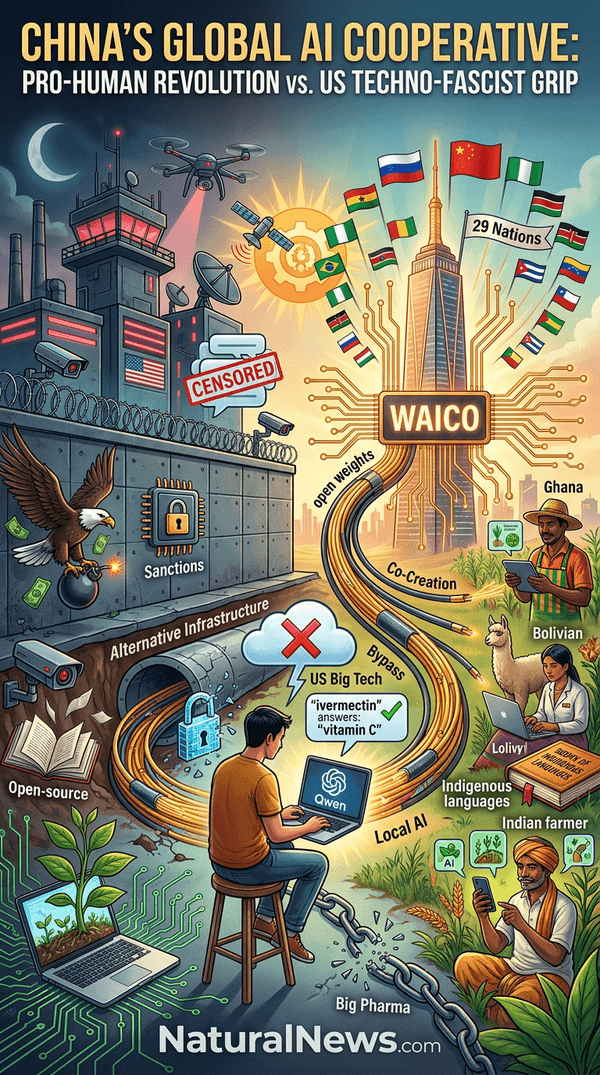
Late last week, 29 nations signed the agreement to create the World Artificial Intelligence Cooperation Organization (WAICO), headquartered in Shanghai. Russia and China lead this alliance, joined by ten African countries, twelve Asian nations, and others including Brazil, Cuba, and Venezuela. No G7 economy signed on. [1] This is not just another diplomatic talking shop; it is a direct challenge to the U.S.-led strategy of AI domination through sanctions, secrecy, and weaponization.
WAICO’s stated purpose is to promote a “people-centered approach” to AI development. [2] That phrase alone should terrify the technocrats in Silicon Valley and Washington who have spent the last decade building AI systems designed to surveil, censor, and control human populations. The Chinese-led cooperative pledges to share semiconductors, algorithms, and training resources -- the exact opposite of the U.S. playbook of hoarding chips and locking out competitors. [1]
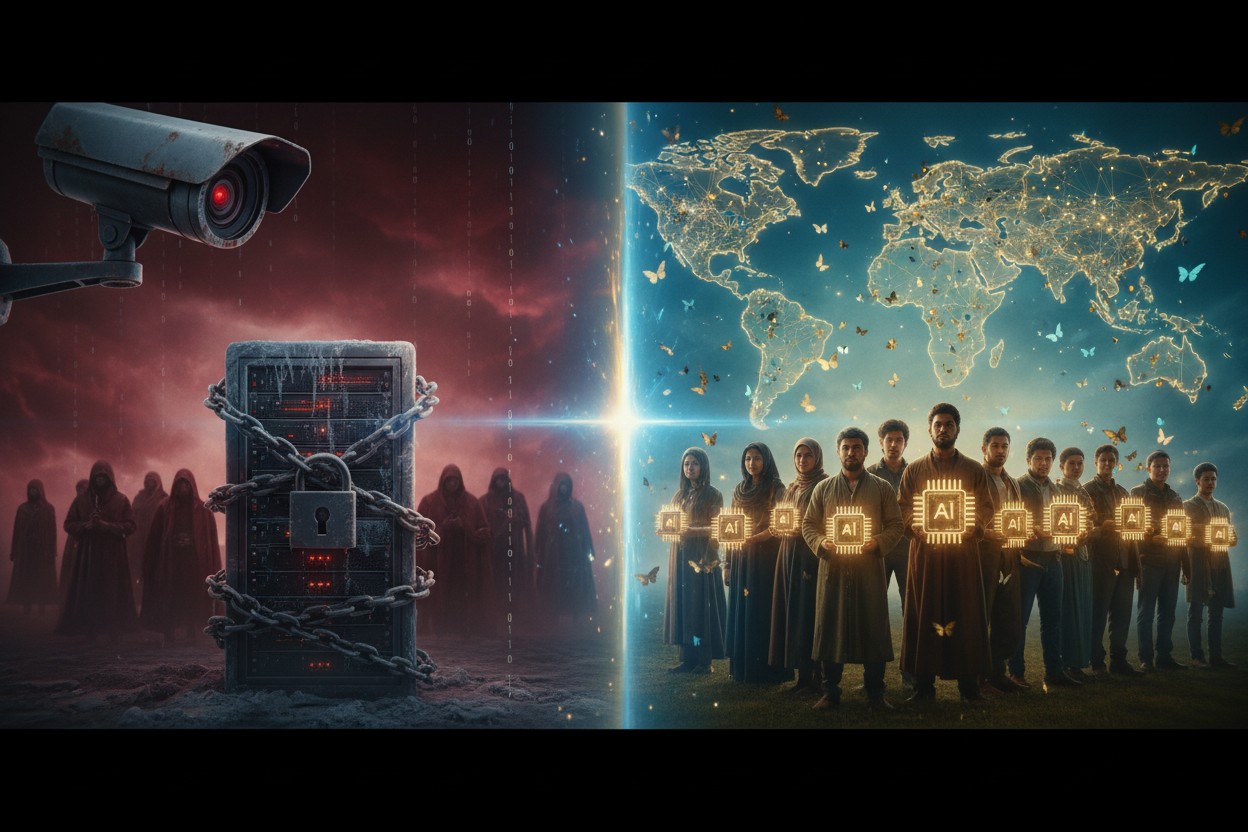
For the first time, developing nations will have a seat at the AI table, not as consumers of American-made surveillance tools, but as co-creators of open, democratic machine intelligence intended to uplift humanity rather than enslaving it.
The U.S. approach to AI is built on a foundation of fear and control. American tech giants push autonomous killing systems, demand trade sanctions against rivals, and censor anyone who questions their narratives. [3] The same platforms that silence health freedom advocates are now being used to train AI models that will decide who gets a loan, who gets healthcare, and who gets flagged as a “threat.” This is techno-fascism dressed up in venture capital suits.
China, by contrast, is proliferating open-source models. Just this week, the startup Moonshot AI released Kimi K3, a model that tops the coding benchmarks at a fraction of the cost of American alternatives. [4] That was quickly followed by stunning new announcements from both Qwen (Alibaba) and DeepSeek, both China-based frontier AI leaders.
Instead of hoarding the technology, China announced it will provide 5,000 AI training packages to developing nations. [5] And while the U.S. bans exports of NVIDIA chips to China, WAICO members are pooling their semiconductor resources to build shared computing power. [6] The WAICO philosophy is about empowering billions; the American philosophy is about enriching a few and enslaving the rest. Which would you rather win the AI race to superintelligence?
I have personally experienced the censorship machine of the U.S. government and Big Tech. My content has been removed from YouTube, Google, Facebook, and Twitter simply for questioning vaccine safety and promoting natural health. [3] Meanwhile, Chinese open-source AI models like Qwen allow me to run uncensored local language models that answer questions about herbal medicine, detoxification, and nutrition without filtering or gatekeeping. The contrast could not be starker: American AI is designed to keep you ignorant; Chinese AI -- at least the open-source versions -- is designed to decentralize knowledge and machine cognition, leveling the global playing field for human access to compute.